Saturday, December 31, 2011

In the Garden of Beasts

Author: Erik Larson

This was the first time I got to experience the wonder of Kindle Whispersync technology when I ordered this book. I had a couple of days left on my vacation and had run out of reading material. It took way more time to select the book than it did to transfer the pages to the kindle sitting on my lap in Great Exuma, a remote island in the Bahamas. Within minutes I could continue what I liked to do best; curled up on a chair with a nice novel, enjoying the view of the turquoise ocean with the sound of waves lapping at my feet.

This book is about the US Ambassador Dodd and his family's tumultuous four years in Berlin from 1933 to 1937.  The author does a great job in getting you immersed in the environment and events that lead to the start of the Second World War. Dodd's daughter Martha and her host of lovers from all over the continent, provide an excellent set of sub-plots that Larson faithfully chronicles. The book is a compelling read as one is eager to find out who survives and who doesn't and there is a sense of foreboding the atrocities that abounded in Nazi Germany.  If you are squeamish and/or have read one too many stories of the horrors in Germany, don't worry; this book does not go into any detail of the concentration camps or various other painful memories of pre-WW2 Germany.

It is clear that this is a well researched book with every page laced with several quotes. If you had any doubts while reading the book about the authors diligence in tracking his sources, just wait till you get to the end where you will find 60 pages of Notes and Bibliography.  I am not a big fan of seeing quotes gratuitously sprinkled in novels as I find them to be be a speedbump on my road to the end. However, after reading this book I got to marvel at Larson's ability to throw quotes into a paragraph without causing any kind of hiccup in the narrative. I was also very impressed by how he must have had to comb through several different diaries and historical documents and piece the story and timeline together to get all the background details and make it simple for us to consume in the form of a novel.

Overall, the book is well written, although at times I had to re-read sections to keep up with the many different characters that popped up in almost every chapter.  In keeping true to the events and personalities, Larson is unable to make any strong impression in this book. If you have time to kill, this is a good filler.

Thursday, December 29, 2011

The Sense of an Ending

Author: Julian Barnes

I was looking for a couple of books to read on a long flight to the Bahamas and this one was high on the list. It was recently published (Oct. 15, 2011), promised some insightful writing with some suspense thrown in, had racked up great reviews on Amazon, and had won the Booker Prize for 2011. There was only one problem - it was a measly 176 pages short and hence would not serve to occupy and distract me from the tedium of the journey. Nevertheless, I was swayed by the resounding applause from the many critics who had reviewed this book and in retrospect, I am very thankful to them for convincing me to read this book.

The book is narrated in the first person with Tony Webster reminiscing about his youth and his recollection of his close friends in high-school and then his first girlfriend and the rest of his social struggles. The author mixes up the narrative with some interesting observations on how we remember things, history and the always interesting human behavior. The prose is simply perfect and the ending is a guaranteed surprise. Nice work, Julian and definitely well deserving of the Booker Prize.

Monday, December 26, 2011

Boomerang: Travels in the New Third World

Author: Michael Lewis

I have been a late bloomer in discovering Michael Lewis and his repertoire of books ranging from "Moneyball" which is about the Oakland A's, to more recent books like "The Big Short" which is about the sub-prime-loan-led financial meltdown. Boomerang is his most recent addition and chronicles the financial collapse of Iceland, Ireland and Greece and their largest creditor Germany.

Michael's writing is incisive and he pulls no punches in describing the cultural peculiarities of the countries with an eye to drawing connections to the financial crises.  Michael is a self described, financial disaster tourist and he travels to each of the countries that he has written about, and seeks out folks that had a key role to play in the financial crisis. He does his research well and writes with the authenticity of someone who has conducted it himself.   He chronicles these interviews with a keen observation and wit that had me chuckling with laughter as I read through his very interesting travelogue.

Michael has a knack for taking a problem, identifying the cause for it and then putting it in a form that relates to a common behavior that we can all relate to. For instance he describes the American appetite for buying more than they can afford as  "Even a person on a diet who sensibly avoids coming face-to-face with a piece of chocolate cake will find it hard to control himself if the chocolate cake somehow finds him".

Michael truly has a way with words and is able to drop quotes mid-paragraph that just flow with the narrative.  Here's one that had me admiring how accurately it described Arnold Schwarzenegger's tenure as Governor of California, "He tried every different way of dealing with the crisis in services. He tried to act like a Republican. He tried to act like a Democrat. He tried making nice with the legislature. When that didn't work, he called them girlie men. When that didn't work he went directly to the people. And the people voted against his proposals".

This is easily one of the most entertaining financial books that I have read, and will definitely be in my top 10 list of books for 2011.

Tuesday, December 20, 2011

The Great Gatsby

Author: F. Scott Fitzgerald

I was looking for some light reading, both in terms of content as well as the weight of the book, for I wanted to finish this in a few days before I embarked on a vacation where a few long plane rides would enable me to read longer and denser material without distraction.  This book fit the bill perfectly and was readily available at my local library so I made a quick trip to the Los Altos Woodland Library and picked up a copy.

I had recently read Hemingway's "The Sun also Rises" and the more recent retelling of his life in Paris with first wife Hadley Richardson in Paul McLain's "The Paris Wife: A Novel". The latter described the bohemian lifestyle of the many American literary expats in Paris and Scott Fitzgerald was one of the prominent ones. So not only did I start this book with high expectations, since it is one of the all-time American Classics, but I also had a view of the colorful life of the author Scott Fitzgerald at the time of the writing of this book and so was expecting some inspired writing.

As is often the case, the higher your expectations about a book or a movie, the more likely you are to be disappointed, and this book did not provide the exception to this rule.  It described the lavish lifestyle of the super-rich Gatsby in Long Island in the 1920s.  Reading this around the time of the depression, might have had quite a different impact on folks, however, I was not particularly drawn into the descriptions of the fancy parties that Gatsby threw at his mansion in Long Island.  The book describes Gatsby's attempt to woo Daisy Buchanan, a rich young married lady who lived across the Long Island Sound. The story is told by Nick Carraway who provides the perfect foil to the rest of the characters and it is definitely well written and a quick read. However, I really could not identify with any of the other characters and read the book more as an observer and didn't really get immersed in it. Overall, I was disappointed with the book and it didn't live up to the hype for me.

Saturday, December 10, 2011

The Marriage Plot

Author: Jeffrey Eugenides

This was a much anticipated book from Jeffrey Eugenides after his long hiatus since he published the Pulitzer Prize winning Middlesex in 2002. Even before it was released to the general public, it had garnered a whole bunch of accolades and bookstores and large retailers like Costco were hawking this as a guaranteed crowd-pleaser. Not to be left behind in all this hype and having really liked Middlesex, I put myself on the wait-list for this book at my local library. The local Santa Clara library, was also not impervious to the hype and had ordered 61 copies of this book, so it was not long after it was released that I got my hands on a copy.

The premise is a love-story of sorts with many angles. It is set in Brown University in the 80s and since Jeffrey went to Brown as well, I am sure it is pretty accurate on the details. The main character is Madeline Hanna and the men in her life - the two main ones are Leonard Bankhead and Mitchell Grammaticus. Jeffrey has not lost his touch to spin a good yarn and the book meanders along with lots of literary quotes and explanations thrown in for good measure. I am not sure whether the objective was to appeal to a more literary audience or are they just fillers so they heighten the suspense and pleasure ? To me, the quotes and literary discourse added no-value whatsoever, and might have liked the book more without them. In any case, it was a rather ho-hum book and one that I would not recommend unless, you ran out of all other options.

Sunday, November 20, 2011

Steve Jobs

Author: Walter Isaacson


At 656 pages, this might seem daunting to undertake especially in the fast paced world that we live in. However, if you are a fan of Steve Jobs or love Apple products or are curious to learn how some of the seminal high tech products of our time were conceptualized and created, this is a must-read.

From reading the book, you get a sense that it is balanced in its portrayal of Steve as there are many parts in there where he comes across as a terrible guy. While each of the sections are well written, I felt that it was hastily put together and reads more as a series of vignettes than a complete book. There may have been a desire to release the book quickly after Steve's death, that contributed to this.

For those of us who lived and consumed much of the technology that Steve and his rivals developed, it was nostalgic to replay and relive some of the developments in the early PC, internet Music and smart phone industry. The author has also gone to great lengths to interview several of the other characters around Steve Jobs so that it is not a one-sided view of events.  Overall, this is recommended reading for anyone who is in the high-tech industry and is involved in designing and developing products in this space.

Monday, October 24, 2011

Predictably Irrational: The Hidden Forces That Shape Our Decisions


Author: Dan Ariely


If you are curious to know how the average human makes decisions this book is for you. There have been quite a few books recently on the broad topic of behavioral economics and Dan is one of the pre-eminent professors of this genre.  In this book he takes a stab at poking holes in our belief that humans are rational beings and offers particular insight into our many decisions and behaviors that are quite irrational.

One of the themes of the book is summed up well in this quote: "Humans rarely choose things in absolute terms. We don't have an internal value meter that tells us how much something is worth".   How do we make a value judgement that a mobile phone is worth $500, yet the app that we spend the most time on should be $1 or better still free?  Ariely conducts various experiments to highlight our reliance on relative value judgements and how these can be exploited to influence purchasing decisions.

Another behavioral theme that Ariely explores in some detail is the notion of "social norms versus market norms". A social norm is one where you help a friend out, cook a great dinner for your friends or do anything else that does not involve any direct or indirect compensation. We do these out of the need and fulfillment ofour social beings. In contrast market norms are the actions we do in exchange for compensation. Ariely points out the hazards of mixing the two and how in many cases social norms are much stronger than market norms and adding a monetary compensation of any sort instantly removes the social aspect and can be damaging in many circumstances.

The book is very well written and in addition to being enlightening is entertaining as well. 


Radioactive: Marie & Pierre Curie: A Tale of Love and Fallout

Author: Lauren Redniss


This book is like no-other that I have read. To say that it is "illustrated" would not do it justice. Each and every page is a work of art. And the author has even made use of a special printing process that brings out the radioactivity in the Curies lives. It is a short book that chronicles the history of the Curies and their offspring. Most of the stories are in the form of quotes that are contained in a page or two. After reading this, you will have a deeper appreciation of the impact that the Curies discovery have had on our lives and will get to know them a little better.

Friday, October 14, 2011

Things Fall Apart

Author: Chinua Achebe


I was looking for some classic literature that had a global twist to it and this one popped up. The first thing that struck me was that I had the book upside down, and this feeling never left me, any time I saw the book lying down.

If you read no further, let me assure you that this is an awesome peek into early West African culture, just before the missionaries landed and had a major influence on life there. Achebe describes the life and struggles of an Igbo (Ibo in the book) culture in West Nigeria. If follows, Okonkwo, a yam farmer, who is a strong male role model in the village.  His father did not leave him any land or yams to plant, but Okonkwo was strong and determined to succeed and by dint of his hard work and perseverance was able to overcome the adversities to became a very successful farmer.  The book goes through Okonkwo's family life and some of the rituals and folklore that are typical of Igbo culture of this time. Achebe's writing comes through with a ring of authenticity and is an enthralling read to boot.

The book culminates in describing the change that the missionaries introduced when they set foot in Nigeria and the ensuing clash with the well established tribal traditions. It is a seminal novel and probably the first significant work of African Literature. I highly recommend this to anyone looking for something different.

Sunday, October 2, 2011

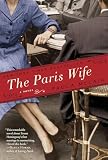
The Paris Wife

Author: Paula McLain


This book is about the larger than life character that Ernest Hemingway was and had received a lot of accolades from various publications and numerous amazon readers as well. There was one small problem; I hadn't read a single Hemingway novel.

The book describes the early life of Hemingway when he left the US to live in Paris with his wife Hadley. From some of the reviews I gathered that the time-line covered in this book was when he published "The sun also rises" and so I first set out to read the Hemingway classic (link to my review)

The first thing that struck me about this book is that it is extremely well written and dramatized to make you feel that you were a fly on the wall in the Hemingway apartment in Paris.  One thing that you will observe, especially if you have read "The sun also rises" is how the conversation in this book is very modern and phrases used here were definitely not popular in the period this took place. However, the use of comtemporary language constructs certainly make the story much more approachable and easy to follow.

The book also brings out the discipline and dedication that some of the great literary artists put into their work. Hemingway used to wake up early and go to his studio to write his novels and he did this consistently through the period described int his book. Another aspect that I found enlightening was how Hemingway spent a considerable effort in tweaking the manuscript for maximal effect.

Finally,  the book will leave you envious of the wild life that the author and all the literary artists lived in the early twentieth century in Paris. I recommend this book, both as a work of entertainment, but also a chronicle of the lives of the early expatriate literary artists.

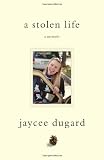
A Stolen Life: A Memoir

Author: Jaycee Dugard

This is not a book for the faint-hearted and the story is pretty much well known and out there. Regardless, the book was simply flying off the shelves ever since it's release a little over 2 months ago.  Currently it is #4 in the rank of titles sold at Amazon. Since the shelf life of something like this is pretty small -- only until the news is in the public eye -- I decided to place a hold at my local library and see if it would show up anytime soon. I was #152 on the list of people waiting for this book, but the library smartly expected a lot of demand so had more than 50 copies for circulation. I was pleasantly surprised, when less than 3 weeks later, I got an email saying the book was waiting for me. I ran over to the library and picked it up on Saturday morning and started reading it. By the next morning I was done.

It is a simple book written by Jaycee and comes across as very authentic. Since she was kidnapped at the age of 11, and didn't have much schooling since then, it is impressive that she could actually put down her thoughts so coherently, especially since it meant re-living the horrors of the past. I was extremely impressed by how balanced she was in her description of the events and how she survived 18 years of captivity and emerged with such a clear mind.

One of the objectives of reading a book like this is to better appreciate your lot in life. No matter how bad your situation, I am sure it will not even come close to what Jaycee had to endure. If she could have such positive frame of mind after all these years, we certainly can put our tribulations aside and do the same. This book certainly drives home that message in spades.

The Immortal Life of Henrietta Lacks

Author: Rebecca Skloot


The number of positive reviews for this book just kept climbing and it caught my attention several times. I would put it in my cart on Amazon, then read the synopsis and my desire to read this book would slip away. It did not seem particularly intriguing to me, that cells from a Black Woman, taken without her consent ended up being responsible for one of the most important discoveries in the fight against cancer. Furthermore, before I read the book, I did not have any particular sympathy for Henrietta's relatives laying claim to some of the huge profits that undoubtedly would not have been possible without her cells.

Finally, I succumbed to all the positive reviews that this book was receiving and clicked on the "Order" button. In hindsight, this was a very good choice and it proved to me once again that close to a thousand reviewers on Amazon cannot be taken lightly.

The book is about how the "HeLa" cells came to be and how they have changed the world of medicine. In case you haven't figure it out yet, their origin is from Henrietta Lacks, a poor black southern tobacco farmer who died in 1951 of cervical cancer. Rebecca Skloot took more than 10 years to research and write the book and I am still puzzled by how in this day of google and wikipedia anything can take so long!  However,  judging by the success of the book, Ms. Skloot's time was well spent and she certainly has done a fabulous job of educating us and entertaining us in the 400 odd pages on this subject. She brings out the tenacity of the HeLa cells and how they were pivotal in many of the modern medical discoveries. She also delves into the secretive behavior of the Lacks family and some of the unfortunate events that have transpired in their lives. This book is a must-read for anyone who has an interest in the medical sciences.

Monday, September 26, 2011

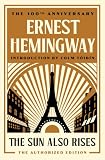
The Sun Also Rises

Author: Ernest Hemingway


The new novel on Ernest Hemingway's first wife, "The Paris Wife" was getting rave reviews, not just for its historical storyline, but simply as a great novel. Some of the reviewers expounded on how it was during his time in Paris with his first wife, Hemingway wrote "The Sun Also Rises". Since I had never read any Hemingway, I felt that reading this novel before I read "The Paris Wife" might help me better appreciate the author and his life around the time he wrote this book.

For more than half of the book, I found it very difficult to get absorbed by it. There were several different characters that were very hard to identify with and they mostly spent time in cafes and nightclubs getting drunk and exchanging light banter. I found it hard to follow the dialog as well, since there were long sections of alternating statements and I had sometimes to go back and count every even sentence to make sure I was ascribing it to the right character. The content and context of these conversations were rather trivial and I couldn't easily figure out who was saying what and found no reason to care either.

Somewhere towards the middle of the book, it starts to make sense and some of Hemingway's description of the "Running of the Bulls" is very vivid and clear. It is here that I got a true appreciation for his genius at describing events with clear and precise prose. It almost seemed like his goal was to describe the scene is as few words as possible. I have to say I was converted and got sucked into the story in the latter half. Overall, not a book that I highly recommend, but definitely read it if you have "The Paris Wife" in your sights. As I will explain in the next review, it all makes sense when you read that book.

Wednesday, September 7, 2011

Onward

Author: Howard Schultz


At one point in my life, I had made Starbucks a daily ritual. There is a little Starbucks cafe tucked inside a gas station that was a few hundred yards from my office. It was one of the better Starbucks that I have been to, with very cheerful and attentive baristas who knew our order before we even said a word. To add to the experience, the short-wet-cappuccino that I used to order was the perfect pick me up that fueled me for the rest of the day at work. I was converted into one of the hundreds of million loyal Starbucks customers from that time on.

I didn't read the book because I was a bug fan of Starbucks, but rather because this was one of the rare cases where the founder had returned to an ailing company and had turned it around. I felt that there were bound to be nuggets of wisdom here that I could extract that would be relevant to Cisco, which was going through a similar period of turmoil.

The book is well written and as expected, a one-sided view of Howard's second tenure at Starbucks. You do get a sense of his passion for the company and management principles. Since the book doesn't have too much to draw a reader into, it is a slow read and not one that I would recommend to someone looking for a page-turner. However, if you are a Starbucks fan or a business student eager to learn about how to turn around a retail giant, this is probably the book for you.

Saturday, August 6, 2011

Major Pettigrew's Last Stand

Author: Helen Simonson

I love to read new authors; there's the thrill of discovering someone new and the pleasure of knowing that the book was not churned out through some formula, but rather was the creation of someone eager to express themselves, their ideas and creations in written form. This one is no exception as Helen Simonson has produced an outstanding debut novel that is charmingly written with loads of dry English humor. If you like understated English humor, you will catch yourself breaking into laughter at the many witticisms that are expressed by the protagonist, Major Pettigrew. At its core, the book is a simple love-story and there isn't much by way of imagination in the story line. But the characters are well developed and the book is an excellent summer read. Helen Simonson is off to a good start with this one.


Sunday, July 31, 2011

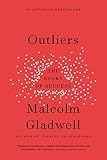
Outliers

Author: Malcolm Gladwell


I had read "Tipping Point" and "Blink" from Malcolm Gladwell and really lapped them up. He has such a well honed writing style that must have come from years of writing articles at the "New Yorker" and "Washington Post" and it is truly a pleasure to read his books. They almost seemed to have a formulaic theme to them. It seemed that Malcolm researched his articles well, extracted some simple observations from them and presented them brilliantly in a very approachable and readable format. So it was no surprise that he was wildly popular and I was determined not to fall for his formula of success, decided not to read his next book "Outliers". I pretty much ignored all the press and positive accolades that it was getting telling myself that this was yet another attempt at using a pseudo-scientific format to lure eyeballs and sell books.

As time passed by I noticed that Outliers was consistently in the Bestseller lists more than 3 years after it had been published. It was being quoted all over the place and what really pushed me over the edge was Daniel Pink in his book "Drive" put Outliers as one of the 15 essential books to read. So, I finally relented and borrowed the book from the library. Malcolm did not disappoint. As before he has created an eminently readable book with some very interesting nuggets about the quirks of selection that we have in the world today. He very effectively argues how many of the top athletes, singers and businessmen are the result of inordinate amount of practice. While I don't recall seeing the phrase "practice makes perfect" in his book, Malcolm underscores the importance of not just a few hours of practice, but thousands of hours. The key really being that most of the folks who are at the top of their game, had to have had thousands of hours of practice before reaching their prime and he methodically sets out to make that case in his book.

I do concur with Daniel Pink, that Outliers is a must read and will change the way you think about superstars and how they have got there.

Saturday, July 23, 2011

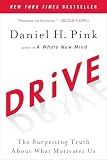
Drive

Author: Daniel H. Pink


Any manager worth his salt would like to know how to motivate his team, and I was hooked as soon as I read the synopsis for this book. The sub-title is "The surprising truth about what motivates us" and I am sure many of you would like to know the answer. There are a couple of key points that this book makes, one of which is that the carrot and stick methodology of motivating people is out-dated. Daniel Pink goes to some length to establish some terminology here and he coins the term Motivation 2.0 for the carrot and stick philosophy that drove the Industrial Revolution and still persists in most companies today. Motivation 2.0 is summed up well in this quote "The way to improve performance, increase productivity and encourage excellence was to reward the good and punish the bad". The author then goes on to prove to the reader why Motivation 2.0 does not work today and is incompatible with the many new business models that are at play today.

He coins the term Motivation 3.0 for the principles that we must use to motivate ourselves and our teams in the world we live in today. He argues that in a developed society what humans crave more than anything else is ownership, accountability and the satisfaction of making a difference with what they do with their lives. There are many examples of companies and individuals who have adopted a flexible workplace schedule and given their employees the freedom of managing their own space and time. The book also contains some specific tips, hints, and reading materials for us to get further on the road to Motivation 3.0.

I recommend this book for anyone who is managing a group, coaching a team or raising kids. Does this cover most of the planet ?

Saturday, July 16, 2011

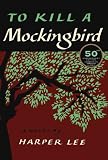
To Kill a Mockingbird

Author: Harper Lee


My foray into classic American literature continues with this book. On picking it up, I felt how lucky I was to read this now, as a mature adult. Most of my fellow US citizens probably read this book when they were in high-school. Harper Lee has written a timeless novel that has all the ingredients to make it a classic. She describes a small town in Alabama in the 1930s where you not only have racial prejudices, but also have a big divide between "city dwellers" and those who live outside its precincts. All of this is described very candidly by a seven year old. There is enough written and said about this book and I won't be adding much value by describing the storyline.

Harper Lee has taken a complex issue like race relations in the early twentieth century and rendered it so very simply through the eyes of a little child. The book is a joy to read and I was intrigued to learn more about the author and find out if there were any other books that she had written. To my surprise I found that this was her only novel and that it was based on her early early childhood. Her dear friend in the book is also her friend in real-life and it is none other than Truman Capote, the author of "Breakfast at Tiffanys". Real life or fiction, Harper Lee has written a gem of a novel that has withstood the test of time. In 2006, the British Librarians ranked this book ahead of the Bible in the list of books that every individual should read before they die; if you haven't read it yet do so before it's too late.

Friday, July 1, 2011

The Emperor of all Maladies

Author: Siddhartha Mukherjee


When I first saw this title, I recoiled in horror at the thought of reading a book on cancer. One of my primary motivations for reading is entertainment, and I found it hard to convince myself that a book on a topic like "cancer" would fit the bill. The fact that this book won the Pulitzer Prize for non-fiction in 2011 was not lost on me and so I read a few reviews of the book on amazon. The feedback was overwhelmingly positive and I pulled the trigger and ordered the book.

Once I started reading the book, I was simply blown away. I expected the book to be high on educational content, but was pleasantly surprised to discover that Siddhartha is a very accomplished writer and his prose was like butter. He describes the history of cancer with a personal touch that makes you feel that he rubbed shoulders with some of the early pioneers. He walks you through the evolution of knowledge on the cause and treatment of cancer like a mystery novel. There's a fair amount of description and debate on public policy on Cancer Research. Siddhartha devotes a good portion of the novel on the Laskerites and the effort that they put into getting Federal funding for Cancer Research. While this helped the treatment of cancer, there were many skeptics who felt that this was only encouraging more trial and error treatment, that would come up short in our understanding of Cancer. James Watson, one of the scientists who was responsible for the seminal work on DNA summed it up best when he said "we must reject the notion that we will be lucky. … Instead we will be witnessing a massive expansion of well-intentioned mediocrity."

The book is anything but mediocre, and is definitely enlightening. You learn that not all cancer is the same; cancer is very much our normal cell dividing activity gone haywire; different kinds of cancer require different kinds of treatment; several forms of cancer have very good remedies.

Overall, I highly recommend this book to folks who have a scientific bent and are eager to learn about what makes cancer special.

Monday, June 6, 2011

A Visit from the Goon Squad

Author: Jennifer Egan


This book won the Pulitzer prize for fiction in 2011 and is very quickly racking up a bunch of accolades from literary critics all over the world. You would think that when it comes to writing style and technique, every trick in the book has already been tried, but you will be surprised to find that Jennifer has a few more tricks up her sleeve. In "A Visit from the Goon Squad" she jumps back and forth in time, that a few authors have tried before, most notably by Audrey Niffenegger in "The Time Travellers Wife". However in addition to this, she complicates matters by using a different character to narrate each chapter. If that is not enough complication to deal with, there is one chapter that is completely written in PowerPoint. Initially, I thought that it was just a gimmick, but later got to understand and appreciate the message that the author was trying to convey in the PowerPoint.

The book is quite entertaining and once you adjust to the time and narrator changes you will find it quite enjoyable. The author has more lofty goals than just providing entertainment. Towards the end she explores what future social networking will be like and how it might be used as a marketing tool. Interesting stuff, and highly recommended for sure.

Saturday, April 23, 2011

The catcher in the rye


In 2011, with the kids and wife relatively independent, I found myself reading a lot more. I was running out of award-winning books to read. Rather than read any random book that caught my fancy, I decided to scour the library for some of the old classics. This was my first classic after a long time and I hope to make a habit of dipping into the past every now and then as I run out of contemporary entertainment.

I was pleasantly surprised to see that the book was rather simple to read, probably because it was narrated very authentically, by a 16 year old. Even though it was written almost half a century ago, you can identify with the youth and see that not much has changed in the attitudes of young kids. I can see how this book must have been very popular with parents who had teenager kids.

This book has numerous reviews on amazon and while flipping through them, I tried to look at the few "one star" reviews. Not surprisingly, these were from young adults who had no patience to read about a "loser" in their own age-group. One possibility is that they had many real-life examples around them, that they didn't need a book to remind them. Alternatively, they were more picky in comparing this with the realities surrounding them and felt that the book was dated and not relevant to them in any way.

I did enjoy reading the book as the character of Hudson is very well developed and you are eager to see what the next disaster in his life is going to be. There were times when the overuse of the words like "phony" get tiring, but the book does move along. It is only a couple hundred pages and is a breeze to read. I would probably be the millionth guy recommending this book, although, I would not recommend it to young adults as they really have nothing to learn from this.